

Is Point of Care Delivering More Impact Than Your Measurement Shows?
In this conversation, Joanne Biscardi, SVP of Business Development & Sales Operations, discusses how patient-centric measurement is helping reveal the true impact of point-of-care marketing.
Originally published as a Point of Care Perspectives Podcast.
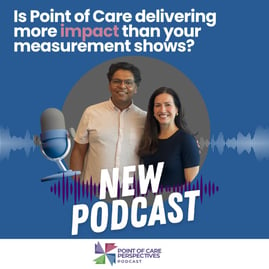
In this episode of POCMA's Point of Care Perspectives, Joanne Biscardi of ConnectiveRx joins Joy Joseph of Medfuse to explore how patient-centric measurement is reshaping the way marketers evaluate point-of-care programs. The discussion covers the challenges of traditional measurement methods, the importance of patient reach data, and how emerging industry standards are helping demonstrate the true impact of point-of-care marketing.
For a deeper dive into point-of-care marketing and its role in patient engagement, treatment conversations, and adherence, listen to the full podcast.
FAQs About Measuring Point-of-Care Marketing
What is point-of-care marketing?
Why is point-of-care marketing difficult to measure?
Point-of-care marketing can be challenging to measure because traditional models often evaluate whether a campaign was present in a healthcare office without accounting for patient volume, office size, or audience reach. This can make it difficult to fully understand a campaign's impact.
What is patient-centric measurement?
Patient-centric measurement is an approach that uses patient reach and claims data to better understand how many relevant patients may have been exposed to a campaign. Rather than focusing only on whether a point-of-care program was active, it considers the audience reached and the potential impact on target patient populations.
How can patient-centric measurement improve point-of-care marketing performance?
By incorporating patient reach and claims data, patient-centric measurement can provide a more accurate view of campaign exposure and impact. These insights can help marketers make more informed decisions around measurement, planning, and investment strategies.