


Point-of-Care Strategies for Pharma: Tactics, Trends, and Technology
Targeted, Measurable, and Trusted
EHR messaging gives pharma brands direct access to prescribers inside their workflow, at the moments that shape treatment decisions and drive brand performance. It is targeted, measurable, and trusted in ways traditional DTC and digital ads simply are not.
From strategy and targeting to adherence and ROI, the EHR is becoming the edge that forward-thinking pharma teams are building into their plans. If you are rethinking your mix, this is where momentum starts.
- Reaching HCPs Where It Matters Most
- Digital Ads Are Saturated
- Proving the Value of Point-of-Care Messaging
- Five Real-Time Messaging Strategies That Work
- A Privacy-Safe Approach to Personalized Engagement
- What Happens When EHR Messaging Supports the Full Patient Journey
- Four Steps to Smarter, Personalized EHR Messaging
- A Case Study in EHR Messaging
- ConnectiveRx's Role and Solutions
Reaching HCPs Where It Matters Most: Inside the EHR
The EHR Opportunity
Prescribers typically interact with their EHR in two settings: administrative workflow and patient-visit workflow. This foundational guide explains how messaging can be embedded in both moments, providing options for targeting prescribers when they are reviewing administrative information or making real-time treatment decisions. Understanding these workflows is the first step in developing an effective EHR-based messaging strategy.
With more than half their day spent in the EHR, prescribers are highly engaged with what appears on their screens. This presents pharma marketers with multiple opportunities to surface content, from inbox messages and login banners to targeted alerts within the e-prescribing module. The right message at the right time can drive awareness, education, and brand adoption.
Learn how your brand can tap into these key moments with the right messaging strategy.
Digital Ads Are Saturated. The EHR Isn’t.
- A study of eight ConnectiveRx programs in which the messages included current formulary information yielded an average 11.9% script lift
- A study of 27 ConnectiveRx programs that featured brand messages plus patient savings offers resulted in an average 11.5% script lift
While digital ad budgets continue to grow, most traditional channels are overcrowded, making it harder for pharma brands to stand out. This guide explores the value of shifting your attention to the EHR, where messages can be delivered to prescribers and patients at the point of care. Instead of competing for attention on social media, marketers can reach HCPs in trusted, relevant clinical environments.
EHR messaging ensures your brand content appears when HCPs are actively making treatment decisions. For patients, it enables educational support and affordability messages to appear at the pharmacy, through text, or via patient portals. With exclusive access and targeting capabilities, EHRs deliver what many mainstream digital platforms can't: focus, relevance, and action.
Proving the Value of Point-of-Care Messaging
If your team is being asked to show more proof of performance, this guide breaks down how point-of-care (POC) messaging can be measured effectively. With insights into session-based engagement, script lift, and test-and-control analysis, marketers can better quantify the impact of EHR-based programs.
Data from ConnectiveRx programs show strong results when brand messages are delivered in the EHR alongside formulary updates or patient savings offers. The guide also explores how messaging to patients at the point of care can reduce prescription abandonment and improve adherence. This is critical for brand teams under pressure to deliver both reach and ROI.
Five Real-Time Messaging Strategies That Work
- Pre-prescription HCP Brand-Awareness Messaging
- Point-of-care Patient Messaging
- Personalized Patient Communications in the Pharmacy
- Reaching Patients via Mobile Text
- Renewal Reminders to HCPs in EHR Workflow

Modern EHR platforms support a wide variety of messaging opportunities, and this guide highlights five options that pharma marketers can put into play immediately. These include pre-prescription alerts for HCPs, SMS and portal communications to patients, pharmacy-based education, and automated prescription renewal prompts.
Whether your goal is to support a new launch, promote patient savings, or simply reinforce brand value at key touchpoints, real-time messaging can be configured to match your campaign objectives. The ability to surround patients and prescribers with targeted content creates a more complete experience across the care journey.
Get Immediate Access
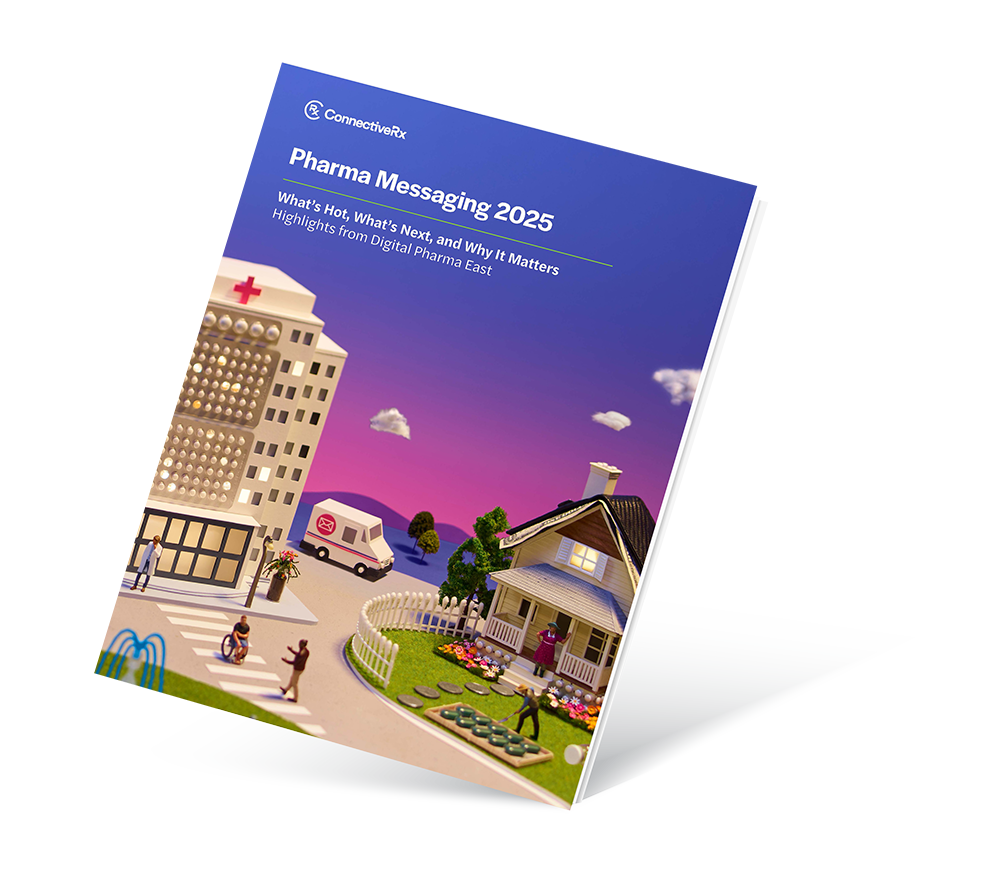
[Guide] Pharma Messaging: What's Hot, What's Next, and Why It Matters
A Privacy-Safe Approach to Personalized Engagement
As third-party cookies disappear, pharma marketers are looking for privacy-safe ways to maintain targeting precision. EHR-based messaging is already built on compliant, closed-loop systems that don’t rely on cookies or external data collection. This guide explains how ConnectiveRx tools enable precise targeting without compromising patient privacy.
With custom messages triggered by clinical or demographic attributes, brand teams can reach highly specific patient types or provider specialties without running afoul of new data regulations. For marketers navigating evolving digital policy, this represents a future-proof alternative to traditional ad models.
What Happens When EHR Messaging Supports the Full Patient Journey.
For messaging to be effective, it must extend beyond the prescription moment. Point-of-care communications can surround the entire patient journey—from initial diagnosis and brand awareness to medication adherence and prescription renewals.
By embedding support materials into the care setting, pharma brands can ensure that the right message is delivered at the right time, and to the right audience. The result is stronger brand visibility, improved patient outcomes, and more impactful provider relationships.
Four Steps to Smarter, Personalized EHR Messaging
This strategic framework walks marketers through four steps for executing highly targeted EHR messaging campaigns. It covers message development, smart trigger logic, patient-specific personalization, and integrated tools to support HCP workflows and renewal alerts.
How can we ensure that vital prescription information reaches patients when they need it? The answer lies not in shouting louder, but in speaking at the right moment, through the right channels, and with the relevant message.
By aligning content with patient behavior and treatment stage, marketers can guide prescribers and patients through key decision points. With automation and relevance at the core, this approach makes EHR messaging more efficient and effective.
Real-World Impact: A Case Study in EHR Messaging
This case study shows how a pharmaceutical brand used in-workflow EHR messaging to guide prescribers during a product formulation change. The solution helped physicians stay in workflow, reduced pharmacy callbacks, and ensured patients received the correct version of the medication.-1.png?width=140&height=134&name=Health%20%26%20Medicine%20(6)-1.png)
The example underscores how EHR messaging can go beyond awareness to create real value in clinical settings. When messaging is aligned with prescriber needs, it helps facilitate treatment decisions, improves practice efficiency, and strengthens brand trust.
ConnectiveRx's Role and Solutions
EHR messaging offers pharma marketers a unique chance to meet HCPs and patients in moments that matter—without adding friction to the care experience. By delivering timely, compliant, and relevant content within a trusted clinical platform, brands can improve engagement, increase script lift, and drive better patient outcomes. Whether you're rethinking your digital ad mix or looking to build more meaningful connections at the point of care, the EHR should be at the center of your strategy.
Frequently Asked Questions
What is EHR messaging and how does it work?
EHR messaging refers to the delivery of brand, clinical, or support content directly within electronic health record systems used by healthcare providers. These messages can appear at various points in a provider's workflow—such as during login, in the inbox, or while writing a prescription—and are triggered based on specific criteria like diagnosis codes, prescribing behavior, or patient demographics.
How is EHR messaging different from traditional digital advertising?
Unlike traditional ads that appear on public websites or social platforms, EHR messaging is embedded in clinical workflows and seen by HCPs at the point of care. It is exclusive, non-intrusive, and contextually relevant—reaching prescribers and patients when they're actively engaged in treatment decisions, rather than passively browsing online.
Can EHR messaging support patient engagement and adherence?
Yes. In addition to reaching providers, EHR messaging can deliver targeted patient communications through portals, SMS, or pharmacy systems. These messages can provide education, cost-saving options, refill reminders, or enrollment in support programs—ultimately helping patients stay on therapy and feel more supported.
Is EHR messaging privacy compliant?
EHR messaging does not rely on third-party cookies or external tracking. It operates within closed, HIPAA-compliant systems and uses de-identified or permissioned data for targeting. ConnectiveRx partners with EHR vendors to ensure all messages meet strict privacy and regulatory standards.
How can I measure the impact of EHR-based programs?
EHR messaging performance is typically measured through session data, message engagement, and script lift. Many campaigns also incorporate test vs. control methodologies to isolate the impact of specific tactics. Results often include increases in prescribing, improved adherence, and stronger ROI compared to other digital channels.